



Why Most Video Content Underperforms (and the Process Fix That Changes Everything)
Article by Morgan Myer
Every year, brands invest more in video. More channels, more formats, more content to feed an ever-expanding machine. And yet the vast majority of it vanishes the moment it’s published. Not because it’s poorly made, but because nobody built a real video content process around it before hitting “go.”
The gap between video that actually moves people and video that simply checks a deliverable box almost never comes down to talent, tools, or budget. It comes down to whether or not there’s a repeatable process governing how content moves from idea to impact.
The cost of not having a video content process
Here’s the pattern we see constantly: a marketing team gets the green light on a video initiative. There’s momentum and a deadline to meet. So the team jumps straight into execution. What’s the script? Who’s editing? When’s it due?
But execution without architecture is just organized chaos. Without a defined video content process, you end up with a deliverable that looks professional but doesn’t ladder to anything meaningful. The messaging is muddled because the strategy was a half-sentence in a creative brief. The creative feels safe because nobody defined what “ambitious” meant for this specific audience. And six weeks later, the content lives on a landing page nobody visits or gets three days of paid social before the budget moves somewhere else. It ostensibly lives and dies in a vacuum.
This pattern isn’t unique to small teams or tight budgets. It happens at every level, from startups to Fortune 500 brands, whenever the process of making video content is treated as an afterthought rather than a competitive advantage.
What a strong video content process actually looks like
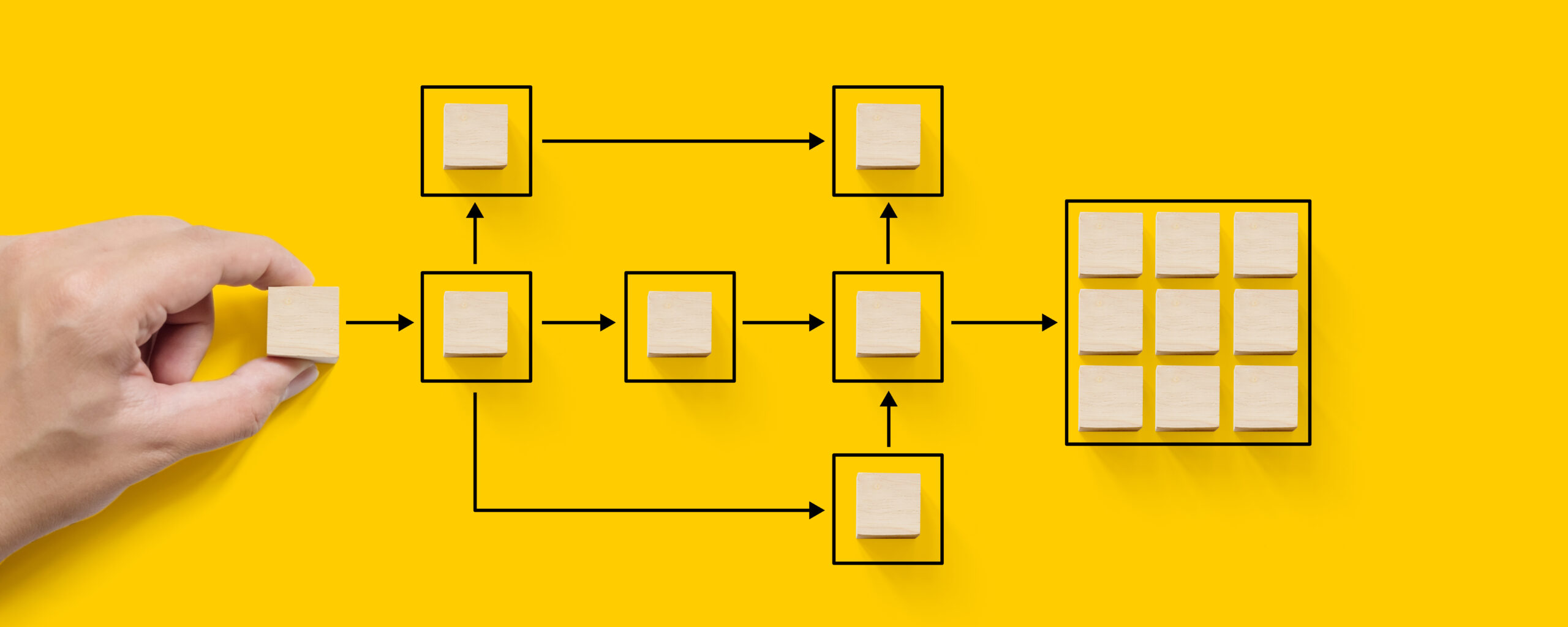
A solid video content process isn’t bureaucracy or red tape. It’s not 47 approval gates or a 30-page brief that nobody reads. It’s a framework that prevents expensive decisions from getting made too early and ensures the right questions get answered in the right sequence.
The strongest processes we’ve seen (and built) break down into three distinct phases. Each one serves a specific purpose, and skipping any of them introduces risk that compounds downstream.
Phase 1: Strategic clarity
Before anything gets made, you need alignment on what the content is actually doing within a larger system. This is the foundational layer of any video content process, and it’s where most teams under-invest because it feels like it’s slowing things down.
The questions that belong here: Who is the audience? What’s their current state, and what needs to shift? Where does this piece sit in the customer journey? What does success look like, and how will we measure it?
A brand anthem and a product explainer might share a budget line, but they serve fundamentally different strategic jobs. Conflating them, or worse, never articulating the distinction, is how you end up with content that tries to do everything and accomplishes nothing. Strategic clarity at the start is what gives every downstream decision a reason to exist.
Phase 2: Creative development
This is the phase most teams rush through because it feels intangible. Stakeholders want to see something, so the pressure to jump to a final product is enormous. But defining tone, creative approach, and visual territory before committing resources is what separates memorable video content from forgettable video content.
In this phase, you’re exploring ideas. Challenging assumptions. Testing what “good” means for this specific audience in this specific context. You’re getting stakeholders aligned on creative ambition before a single asset is in production, which saves enormous time, money, and frustration later.
Here’s the thing most people miss: the messier and more exploratory this phase is, the sharper the final product becomes. The teams that skip creative development pay for it in endless revision cycles, stakeholder misalignment, and safe, compromise-driven output that could’ve come from anyone.
Phase 3: Production and execution
This is where craft meets constraint. Timelines, budgets, deliverable matrices, platform specs, internal approvals. The best video content comes from teams that protect the creative vision through this phase rather than letting logistics erode it one concession at a time.
But here’s the critical dependency: execution only works well when the first two phases were solid enough to serve as a foundation. When strategy is clear and creative direction is aligned, production decisions become intentional. When they’re not, every decision becomes reactive, political, or made by whoever’s loudest in the room.
A strong video content process treats execution as the expression of strategic and creative decisions that already happened, not the place where those decisions get figured out on the fly.
Why your video content process needs to be modular
Not every project needs the same depth at each phase. Sometimes the strategy is locked and you need expert execution. Sometimes you need someone to crack the creative territory while your internal team handles the rest. Sometimes you need the whole thing, end to end.
The best video content processes are modular by design, meaning teams can on-ramp and off-ramp at different phases depending on what the project demands. This is how you stay efficient without sacrificing substance. It’s how you scale content production without every project feeling like it’s starting from zero.
Rigid, one-size-fits-all processes break under the weight of real marketing demands. Modular processes flex with them.
The compound effect of process over time
Here’s what most teams don’t realize: a repeatable video content process doesn’t just improve individual projects. It compounds over time. Each project builds institutional knowledge. Creative territories get sharper. Strategic frameworks get more refined. Production workflows get faster.
Teams with a strong process don’t just make better content. They make it more efficiently, with less internal friction, fewer surprises, and better outcomes project over project. That’s the difference between a content program that grows in impact and one that just grows in volume.
How to evaluate your current video content process
If you’re managing a growing content demand, whether with internal teams, agency partners, freelancers, or some combination, ask yourself these questions:
- Do we have a repeatable framework for moving from business objective to creative deliverable?
- Are strategic, creative, and production decisions happening in the right sequence, or are they colliding?
- Can we articulate why a piece of content exists before we start making it?
- Is our process modular enough to flex across different project sizes and scopes?
- Are we learning from each project, or starting from scratch every time?
If the answer to most of these is “sort of” or “not really,” the content itself isn’t the problem. The process is.
The bottom line
Video content is only going to get more important, more demanded, and more complex. The brands that win won’t be the ones spending the most. They’ll be the ones with the most disciplined video content process: the teams that know which questions to answer first, how to protect creative ambition through execution, and how to build a system that gets smarter with every project.
Process isn’t what slows creative work down. It’s what keeps the work honest, efficient, and resonant. Without it, you’re just spending and guessing. And audiences can always feel the difference between content that was built to land and content that was rushed to exist.
Happy to give you our process and let you run with. Just reach out.